The Round Trip
Director of UX HP | Poly 2026 · Ongoing
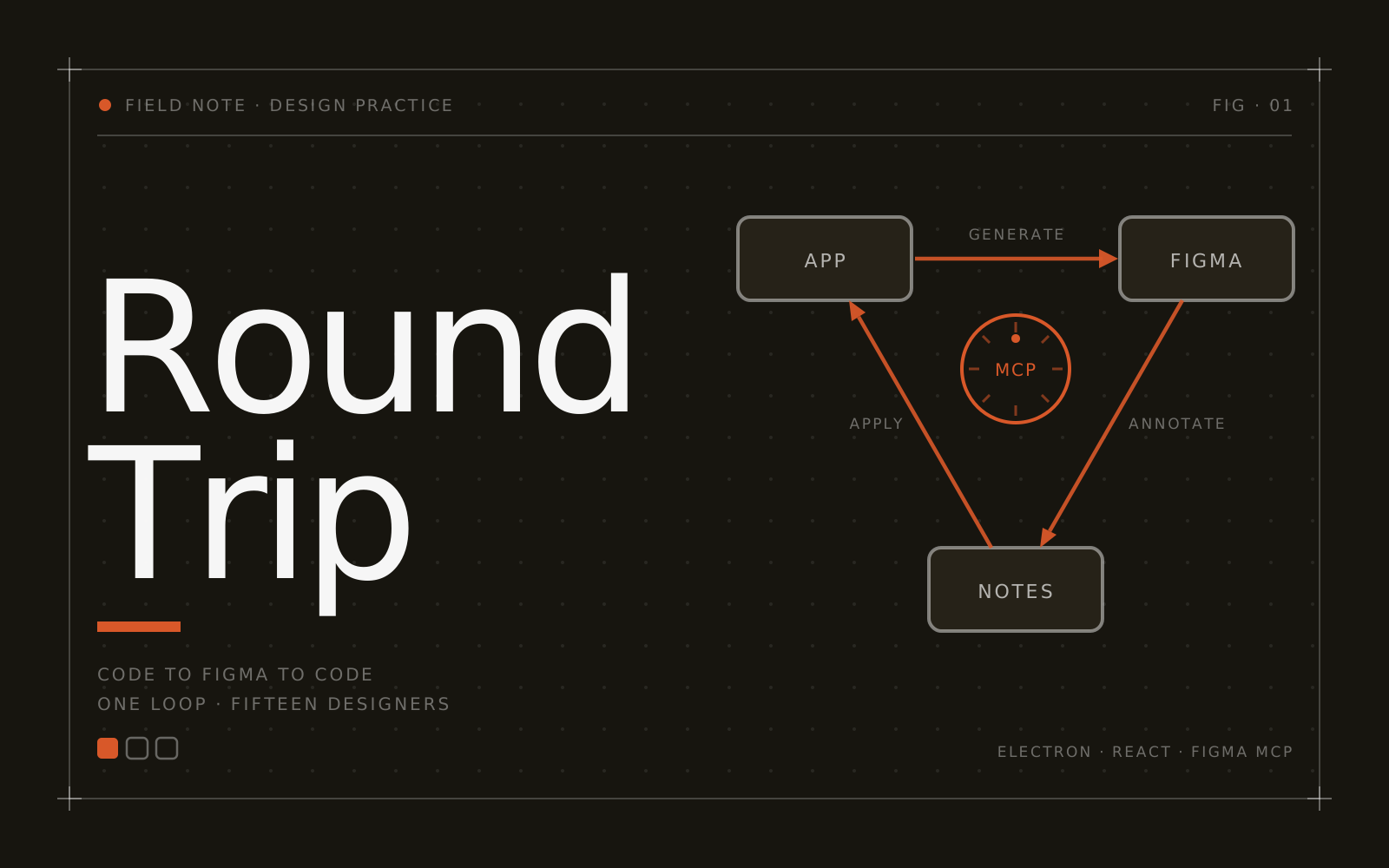
The design files for Poly Studio get generated from the app’s code now, not the other way around. Studio is Electron and React, so the Figma MCP can read the shipping front end and turn it into real, editable Figma. For years the design file was the aspiration and the app was whatever survived the sprint. That’s reversed.
Pull the app into Figma. Walk it screen by screen and polish what needs polish: spacing, hierarchy, the small stuff that drifts when software ships weekly. Then the same MCP connection carries the notes back, so Claude knows which components need attention and why. Review used to mean comparing the app to the file and logging every gap. Now the file is the gap report.
The old path didn’t go away. Customer feedback still lands in JIRA, a designer still answers it with updated Figma designs, and the ticket still moves to dev once design signs off. For a well-understood fix that’s still the right tool. The new loop earns its keep on the wide sweeps instead, the whole-app consistency passes nobody ever had time for before.
Most of my designers still don’t write production code, and I’ve stopped treating that as the milestone that matters. The quieter change: a lot of the team now run Obsidian vaults with Claude connected to them, a working mind map of everything that needs doing and every feature we could build next. Everyone has a second brain to lean on.
The hard part is not where I expected it. Steering an AI-generated proof of concept somewhere shippable turned out to be the real work. The builds run fine. What they’re missing is taste. The output arrives with AI-isms baked in, the interface equivalent of the writing tells: defaults nobody chose, patterns that are almost but not quite consistent. So designers still go component by component, view by view, replacing what the model settled for with what a person would choose. We’ve written elaborate Skills and instruction files trying to encode that judgment. They help. They don’t replace anyone. Taste doesn’t compress into a markdown file yet.
And the take that gets me in trouble: as an industry we’ve over-rotated on AI-everything when the tools are only good, genuinely very good, at specifics. Most exec teams haven’t run the tools deeply enough to know which specifics, and most IT departments gate half of it out of caution, so the map of what’s actually possible lives with whoever’s hands-on. Which means design teams now carry two jobs: practitioner of these workflows, and evangelist for what they should and shouldn’t be pointed at. Taste goes on the shouldn’t list.
So we run both paths. The JIRA tickets keep moving, the Figma files keep coming out of the codebase, and the vaults keep filling with things we might build someday. The polishing never stops. It never did.
Tags
- Applied AI Product Design Designing for models that are good, wrong, or weird. Often on the same screen. I care more about trustworthy and unobtrusive than flashy.
- UX Leadership Mostly hiring people better than me, then getting out of their way.
- Design Management Hiring well and protecting the work, mostly by absorbing the noise before it reaches the team.
- Team Building Most of leadership is keeping the team healthy. The team is where the work actually gets done.
- Claude Code Where the specs get written, the prototypes get built, and the execs get convinced.
- Figma Where the polish happens. Ours get generated from the shipping code these days.
- Electron Chose it because speed beat purity. Mac and Windows from one codebase, and Linux is next.
- React The cross-platform UI layer with the deepest bench. I still reach for it.