Shipping Dark
Director of UX HP | Poly 2026 · Shipping
Most companies keep a lab for new ideas. A protected space off to the side, prototypes and foam models, work nobody outside the team ever sees. We have those too. But the most useful sandbox I have is Poly Studio itself, a cloud-connected Electron and React app running on more than eight million devices. When I want to know if a hybrid work idea is real, that’s where it goes.
That sounds riskier than it is. New work ships dark behind LaunchDarkly flags and stays there until it earns its way out, so nobody outside the team ever sees a half-built idea. But it runs in the real app, against the real fleet, with all the constraints a lab build never has to face. A deck is an argument, and arguments drag on. A flagged build in the shipping product is evidence. I’ve gotten three new products funded off working prototypes instead of slides, so maybe I’m biased here, but the pattern holds inside an existing product too.
First out of the sandbox this year: a fully responsive design for the whole app. Partly that’s just how people use it. Studio ends up snapped next to a video call, stretched across an IT admin’s ultrawide, squeezed onto half a laptop screen. But the bigger driver is that Studio ships preloaded on our commercial machines, and a preloaded app doesn’t get to choose its window. Windows keeps tightening what it expects from pre-installed software, snap layouts included, and those requirements only move in one direction. Going fully responsive now means we stop having that conversation every release.
Second: WCAG 2.1 AA across the entire app, not just the new screens. At this scale accessibility stops being a checklist and becomes a systems problem. Contrast has to live in the tokens. Focus order has to survive every layout. A screen reader has to be able to narrate flows we built years ago. It’s the least glamorous thing we’re shipping this year, and honestly the one I’m proudest of. Most of the people using enterprise software didn’t choose it and can’t opt out. AA is just basic courtesy to them.
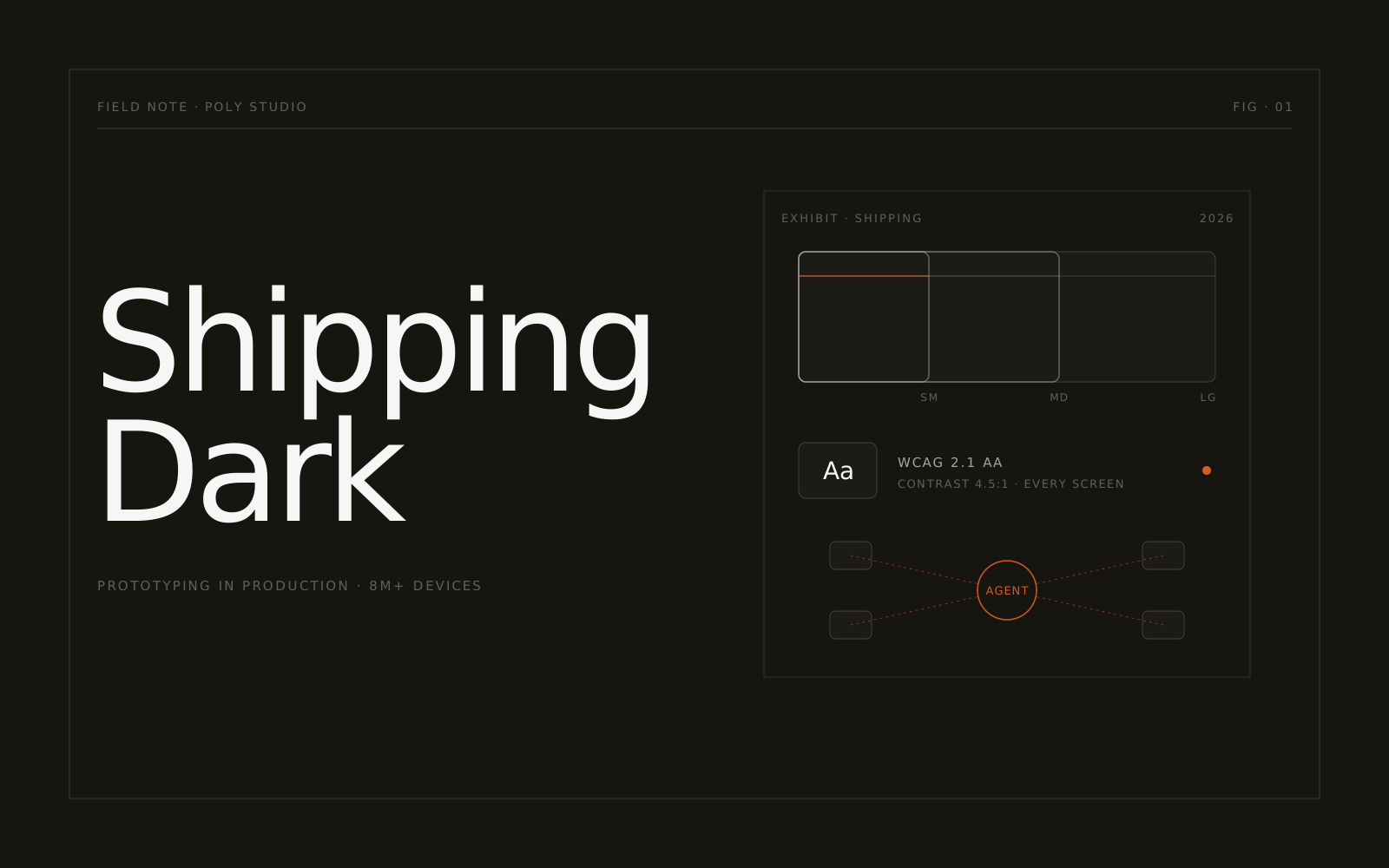
The third is the bet: making the whole app agentic-ready. For a decade this product has been how a person keeps a fleet of devices under control. A dashboard, built for someone to read. I think the OS is slowly becoming an orchestrator, and when that lands, a real share of this work stops going through our screens at all. An agent asks the fleet a question, or pushes a change, on someone’s behalf. So we’re building for both at once: the app workflow people rely on today keeps working exactly as it is, and the same capabilities get shaped so the agentic workflows the OS will orchestrate can pick them up when they arrive. I could be early on this.
There are a few more things in flight that I can’t write about yet. They all started the same way, though: as working builds inside the production codebase, small enough to just try. I still work in that codebase alongside my engineers. It’s not the usual arrangement for a design director, but it’s the only reason the sandbox works.
The responsive redesign ships first. The rest is still dark.
Tags
- Applied AI Product Design Designing for models that are good, wrong, or weird. Often on the same screen. I care more about trustworthy and unobtrusive than flashy.
- Enterprise Software Designing for people who didn't choose the tool and can't opt out.
- Electron Chose it because speed beat purity. Mac and Windows from one codebase, and Linux is next.
- React The cross-platform UI layer with the deepest bench. I still reach for it.
- Accessibility Not a checklist at the end. Contrast in the tokens, focus order in the bones, semantics a screen reader can narrate.
- AI Agents Agents that act on the world need guardrails before they need cleverness.
- Design Systems A good one removes a hundred small arguments a month.
- Cloud Management Millions of devices and thousands of admins on one console that has to stay calm.